

How to Find a Reliable Harmonic Reducer Wholesaler in China?
Choosing a reliable harmonic reducer wholesaler in China requires more than comparing prices and technical specifications. Buyers need to evaluate both the authenticity of product performance data and the consistency of mass production and batch delivery.
For robotics manufacturers, semiconductor equipment companies, CNC machine builders, and industrial automation integrators, selecting the right harmonic reducer supplier directly affects equipment accuracy, operational stability, and long-term maintenance costs.
So, how can you identify a reliable harmonic reducer wholesaler in China? Here are four essential steps to help you evaluate suppliers and make a more informed purchasing decision.
Step 1. Verify Whether the Technical Specifications Meet Your Application Requirements
The first step in evaluating a harmonic reducer supplier is to confirm whether its technical specifications match your actual operating conditions.
Key parameters to evaluate include rated torque, peak torque, transmission ratio, torsional stiffness, backlash, transmission accuracy, input speed, efficiency, and service life.
Different applications have different performance requirements. For example, semiconductor manufacturing equipment and high-end CNC machine tools typically demand high positioning accuracy, long-term precision retention, and excellent operational reliability. Collaborative robots and general industrial automation equipment may place greater emphasis on compact dimensions, torque density, and cost-effectiveness.
Before contacting a wholesaler, it is important to define your application requirements and operating conditions.
For a more detailed selection guide, you can refer to this technical article written by Theodore Li, Technical Director at HONPINE:
How to Select a Harmonic Reducer: 9 Key Factors You Need to Know
Step 2. Evaluate Product Grades and Choose the Right Brand
Not all harmonic reducers on the market offer the same level of performance, manufacturing quality, or long-term reliability.
If your harmonic reducers are intended for demanding applications such as semiconductor manufacturing equipment or high-end CNC machine tools, where precision retention and service life are critical, you should prioritize established brands with proven technical capabilities and manufacturing experience.
Representative brands in this market include:
Harmonic Drive Systems (Japan): An established manufacturer specializing in precision strain wave gearing and motion control products.
Leaderdrive (China): A well-known Chinese manufacturer of harmonic reducers and precision transmission components.
HONPINE (China): A precision transmission and motion control supplier offering harmonic reducers, rotary actuators, and integrated robotic joint modules.
For collaborative robots, general industrial automation equipment, and other applications with less demanding performance requirements, buyers can consider a wider range of suppliers based on their technical specifications, production capabilities, and budget.
Why Are There Significant Performance Differences Between Harmonic Reducer Brands?
One of the major technical barriers in precision harmonic reducer manufacturing lies in tooth profile design.
Unlike conventional rigid gears with fixed axes and unchanged tooth profiles, harmonic reducers operate through continuous elastic deformation of the flexspline.
When the wave generator is installed inside the flexspline, it transforms the flexspline from a circular shape into an elliptical one. At the two ends of the ellipse's major axis, the external teeth of the flexspline fully engage with the internal teeth of the circular spline. At the two ends of the minor axis, the teeth are completely disengaged. Between these regions, the teeth move through transitional engagement and disengagement zones.
As the wave generator rotates continuously, the major axis of the ellipse also rotates, causing the engagement zones to migrate continuously around the inner circumference of the circular spline.
Consequently, the flexspline teeth experience three different engagement conditions during each operating cycle: full engagement, transitional engagement or disengagement, and complete disengagement.
A well-designed tooth profile must satisfy several interconnected engineering requirements:
1. Meshing Geometry
The tooth tips and roots of the flexspline must maintain stable contact with the circular spline in the major-axis regions, avoid interference during transitional engagement, and disengage smoothly in the minor-axis regions.
The tooth-count difference creates a high reduction ratio, but the tooth-count difference alone does not guarantee continuous and stable tooth contact.
2. Load Distribution
The design should maximize the number of teeth participating in load transmission simultaneously. This allows the load to be distributed across multiple teeth, reducing individual tooth contact pressure and localized root stress.
3. Fatigue Resistance and Service Life
Larger tooth-root transition radii can help reduce stress concentration. The design must also prevent fatigue cracks from initiating near the tooth roots or the bottom of the flexspline cup under high-frequency alternating stress.
4. Torsional Stiffness and Backlash
The tooth profile should minimize clearance within the meshing zones to reduce lost motion under both no-load and load-reversal conditions while maintaining high torsional stiffness.
5. Transmission Efficiency and Temperature Control
Relative sliding between tooth surfaces, fretting wear, and frictional heat must be controlled. Otherwise, deteriorating lubrication conditions may lead to reduced transmission efficiency and gradual accuracy degradation.
6. Manufacturing Repeatability
The final tooth profile must be consistently manufacturable through processes such as hobbing, shaping, grinding, or power skiving. Machining errors need to be controlled at the micron level, with assembly selection and inspection procedures used to establish a reliable quality-control loop.
These engineering requirements are closely interconnected.
For example, increasing the tooth-root radius can reduce stress concentration but may also change the effective meshing region. Reducing tooth height may decrease flexspline deformation and contact pressure, but it could also compromise certain transmission characteristics. Increasing the number of simultaneously engaged teeth improves load distribution but places higher demands on tooth profile continuity, machining accuracy, and assembly tolerances.
Therefore, harmonic reducer tooth profile design is essentially a multi-objective engineering optimization problem involving tooth geometry, contact mechanics, fatigue resistance, manufacturing processes, and assembly accuracy.
Different manufacturers adopt different tooth profile designs and modification strategies. In addition, material selection and manufacturing processes, particularly those used for the flexspline, have a significant influence on the final performance of harmonic reducers.
This is one of the fundamental reasons why harmonic reducers with seemingly similar specifications can deliver substantially different results in actual applications.
Step 3. Purchase Samples or Start with a Small-Batch Order
Although harmonic reducers from different suppliers may have similar specifications listed in their catalogs, their actual measured performance can vary considerably.
A product's rated torque, backlash, transmission accuracy, and service life should not be evaluated solely based on catalog specifications.
Before placing a large-volume order, it is advisable to purchase samples or begin with a small-batch order.
During the evaluation process, buyers should focus on whether the actual performance matches the supplier's technical documentation and whether the products maintain consistent quality across multiple units.
Depending on the application, practical testing may include:
Backlash and transmission accuracy testing.
Torsional stiffness and torque testing.
No-load running and temperature-rise testing.
Noise and vibration evaluation.
Performance under actual operating loads.
For critical applications, it is also worth checking whether the supplier can provide inspection reports, material traceability, and relevant quality documentation.
Starting with samples or a small-batch order helps reduce procurement risks before moving into long-term cooperation.
Step 4. Define Acceptance Criteria for Mass Production and Bulk Purchasing
Once the samples have passed evaluation, the next step is to establish clear acceptance criteria for mass production and bulk purchasing.
A reliable harmonic reducer wholesaler should be able to provide consistent product quality, predictable production lead times, and dependable technical support.
Before confirming a long-term purchasing agreement, buyers should clarify several important points:
Batch-to-Batch Consistency: Can the supplier maintain consistent performance and dimensional tolerances across different production batches?
Production Capacity and Lead Time: Can the manufacturer meet your expected order volume and delivery schedule?
Quality Inspection: Does the supplier have standardized inspection procedures and quality-control documentation?
After-Sales Technical Support: Can its engineering team assist with installation, troubleshooting, and application-related technical questions?
Warranty and Service Terms: Are warranty coverage, product replacement policies, and after-sales responsibilities clearly defined?
For wholesalers, distributors, and equipment manufacturers purchasing harmonic reducers in bulk, these factors are just as important as the initial unit price.
Why Choose HONPINE as Your Harmonic Reducer Wholesaler in China?
HONPINE provides harmonic reducers and precision transmission solutions for customers in robotics, semiconductor equipment, medical machinery, CNC machine tools, and industrial automation.
If you are looking for a long-term harmonic reducer supplier in China, here are several reasons to consider HONPINE.
A Comprehensive Range of Harmonic Reducer Models
HONPINE offers a wide range of harmonic reducer models and sizes to accommodate different installation requirements, transmission ratios, and torque demands.
Whether your application involves semiconductor equipment, medical devices, collaborative robots, or other precision automation systems, our technical team can help identify suitable models based on your operating conditions.
Technical Support and One-on-One Model Selection
Selecting a harmonic reducer requires more than matching rated torque and transmission ratio.
Our technical team can provide one-on-one selection guidance based on your application requirements, installation dimensions, load conditions, and operating parameters.
This helps customers identify suitable products and reduce unnecessary selection and integration risks.
Sample Orders and Small-Batch Verification
HONPINE supports customers who want to begin with sample purchases or small-batch orders before proceeding with larger procurement projects.
This allows customers to evaluate product performance and verify compatibility with their equipment before committing to bulk purchasing.
Customized Harmonic Reducer Solutions
Different equipment designs may require specific installation dimensions, output configurations, transmission ratios, or performance characteristics.
HONPINE supports customized harmonic reducer solutions and has accumulated experience in providing customized precision transmission products for different applications.
Experience in Harmonic Reducers and Integrated Robotic Joint Modules
HONPINE has been supplying harmonic reducers since 2018 and has accumulated extensive experience in precision transmission applications.
In addition to standalone harmonic reducers, we also manufacture integrated harmonic robotic joint modules, combining harmonic reducers with motors, encoders, brakes, and other components.
This experience in both reducer manufacturing and integrated joint module development provides a broader understanding of the requirements of robotic motion systems and precision automation equipment.
Contact HONPINE for Harmonic Reducer Wholesale and Bulk Purchasing
Finding a reliable harmonic reducer wholesaler in China requires a systematic evaluation of technical specifications, product quality, manufacturing capabilities, and long-term service support.
Rather than choosing a supplier based solely on price, buyers should verify actual product performance through sample testing and establish clear quality and delivery requirements before placing bulk orders.
HONPINE welcomes inquiries from overseas distributors, wholesalers, robotics manufacturers, and industrial equipment companies.
Contact HONPINE to request our complete harmonic reducer catalog, technical datasheets, and wholesale purchasing information.
Read More
Learn more about the story of HONPINE and industry trends related to precision transmission.
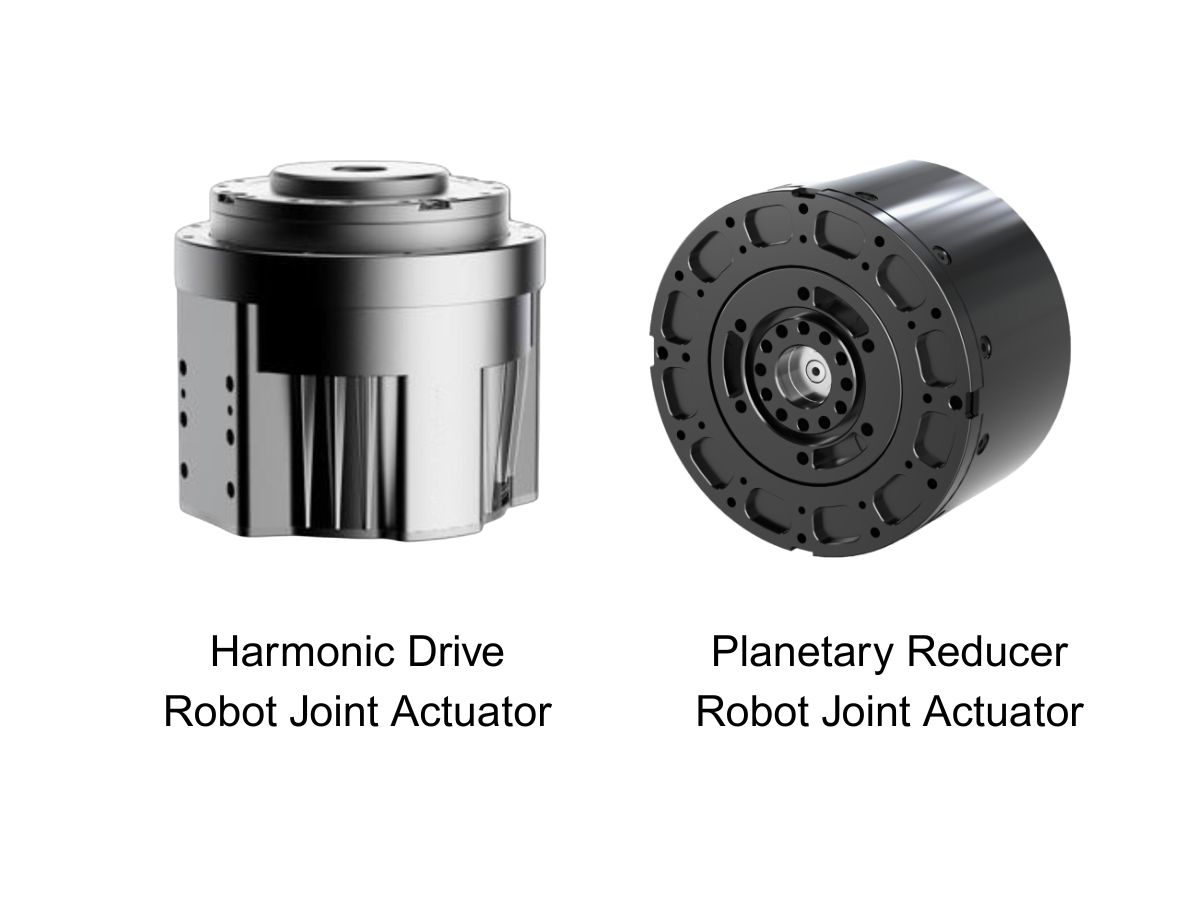
 What is robot joint actuator?How to Choose the Best Robot Rotary Joint Actuator?In core robot joint transmission solutions, planetary and harmonic rotary actuators each have their own strengths. Choosing the right type based on application requirements is essential to achieve the optimal balance between performance and cost.
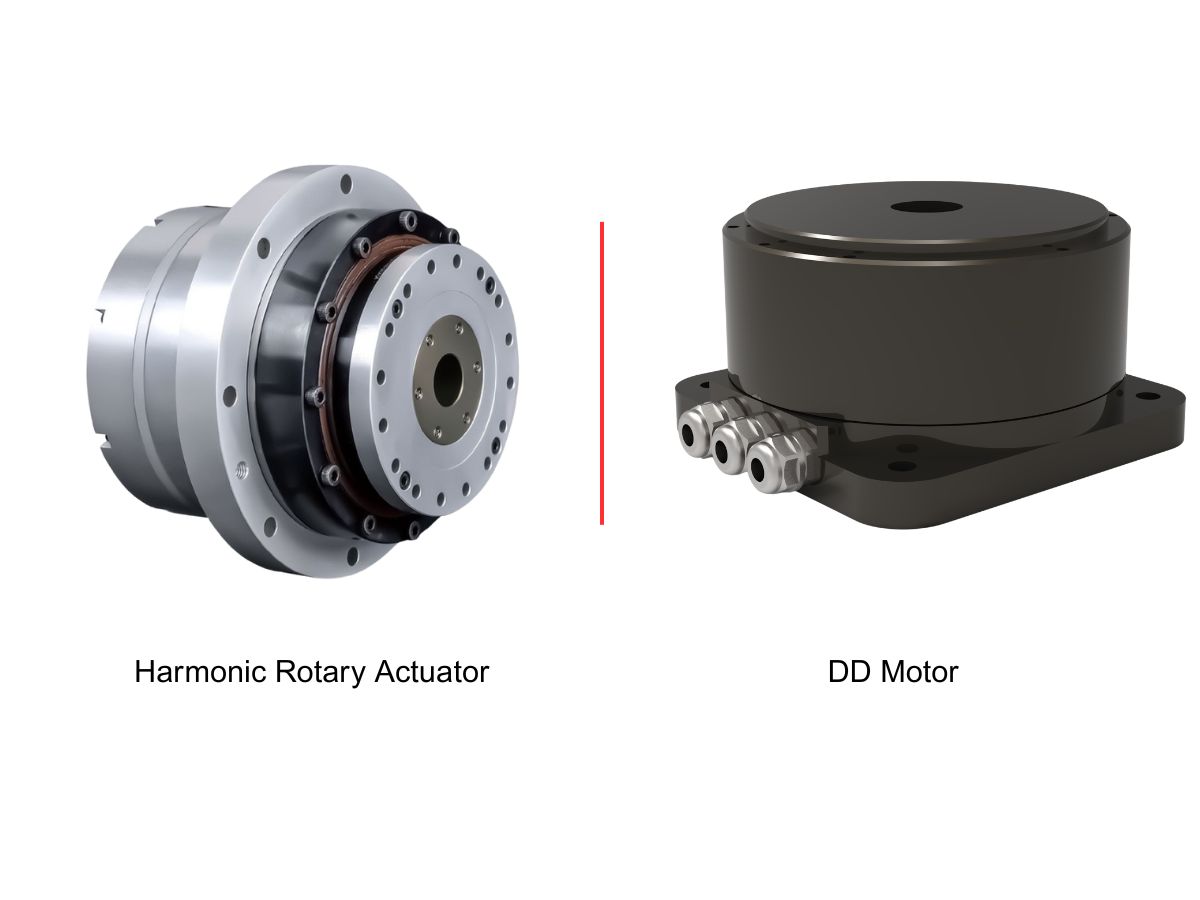
 DD Motors VS Harmonic Rotary ActuatorsThis article provides an in-depth comparison between Direct Drive (DD) motors and harmonic rotary actuators, covering their transmission principles, advantages and disadvantages, and typical application fields.
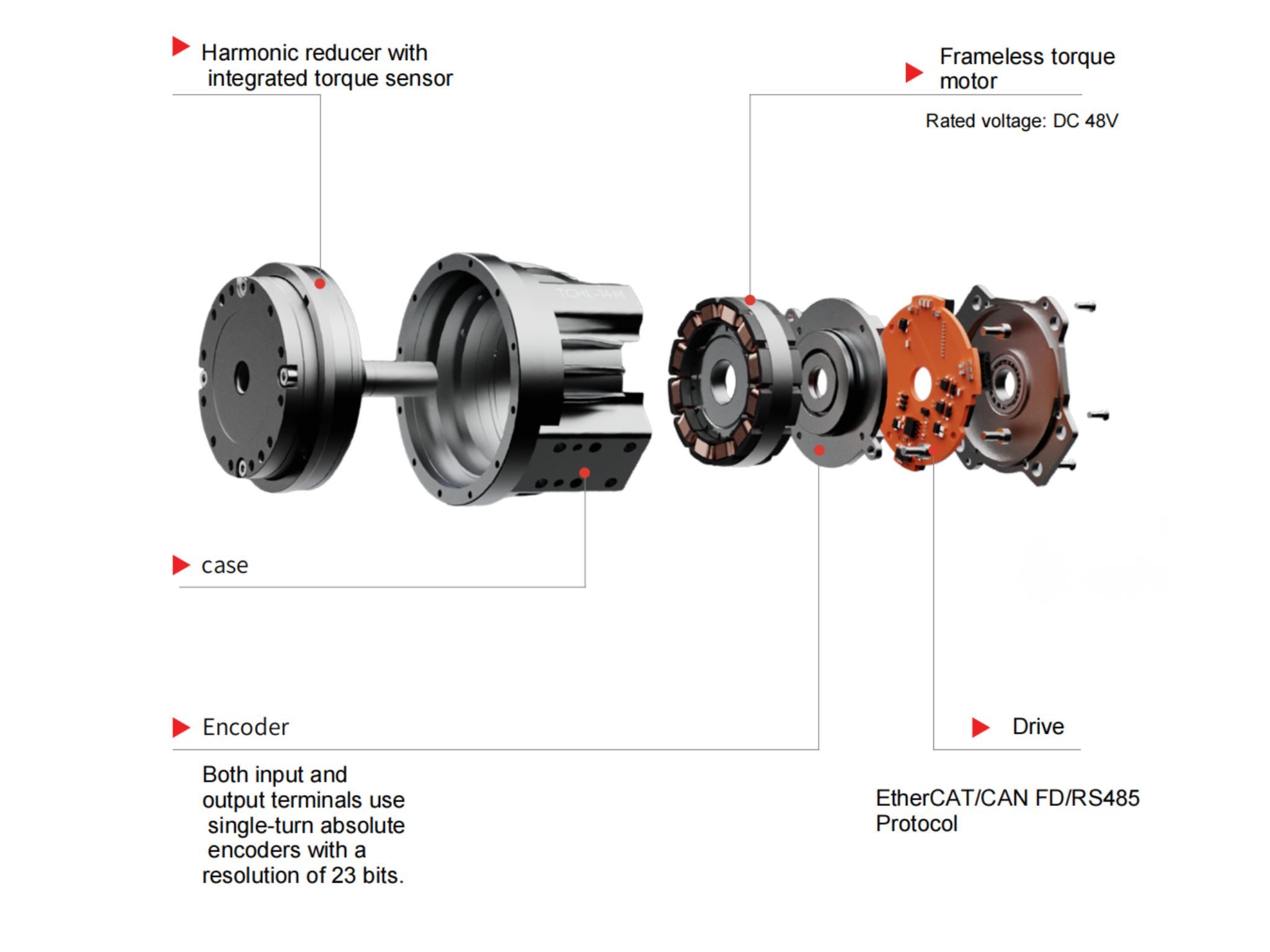
 OMG Ultra Compact Harmonic Drive Joint Module with Built-in Torque SensorHONPINE TCHL series harmonic drive joint module is a game-changing product that achieves disruptive improvements in multiple aspects such as lightweight design, integration level, and connection convenience. This article will analyze its revolutionary enhancements with you.
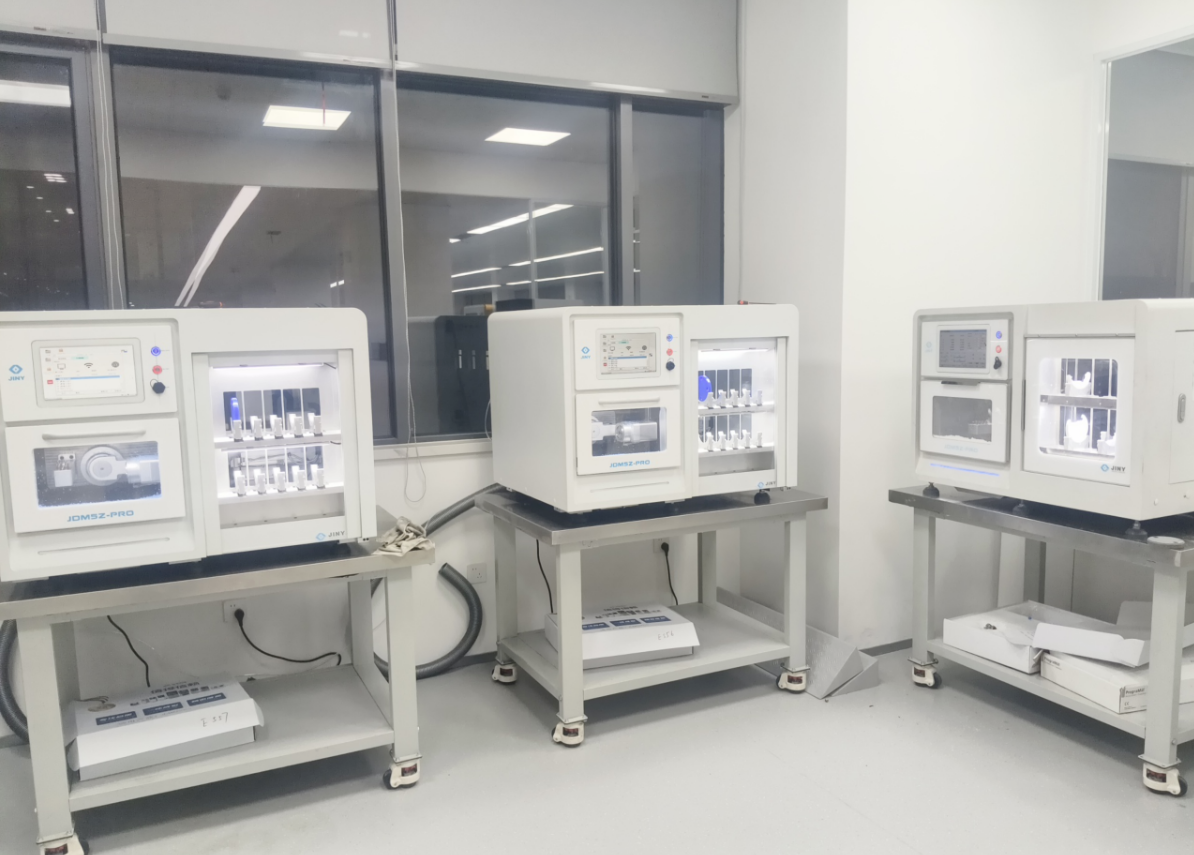
 The Role of Harmonic Drive Gears in Achieving 5–10 μm Accuracy in Dental Milling MachinesA dental milling machine is a CNC machining system used to directly process digital dental models into restorations such as crowns, bridges, veneers, inlays, and implant abutments. Dental milling machines require far higher operational accuracy and motion stability than ordinary equipment. This article explains how harmonic drive gear help dental milling machines achieve stable, continuous, and controllable operation.
 Why Are Harmonic Rotary Actuators Perfect for Medical Equipment?Harmonic rotary actuators (typically integrated systems consisting of a harmonic drive reducer, frameless torque motor, encoder, and optional brake) are regarded as key components in medical equipment. The core reason is that they simultaneously meet the most stringent medical requirements for precision, compact size, safety, and controllability. The following explanation is structured from three perspectives: technical characteristics, application scenarios, and medical value.
 High-Precision RV Reducers Perfectly Matched for Walking RobotsThe walking axis of a robot is a core component for power transmission and support. RV reducers provide extremely high rigidity, precision, and torque while maintaining a compact size and exceptional reliability, making them an ideal match for the demanding requirements of walking robot joints in terms of load capacity, impact resistance, and precision.
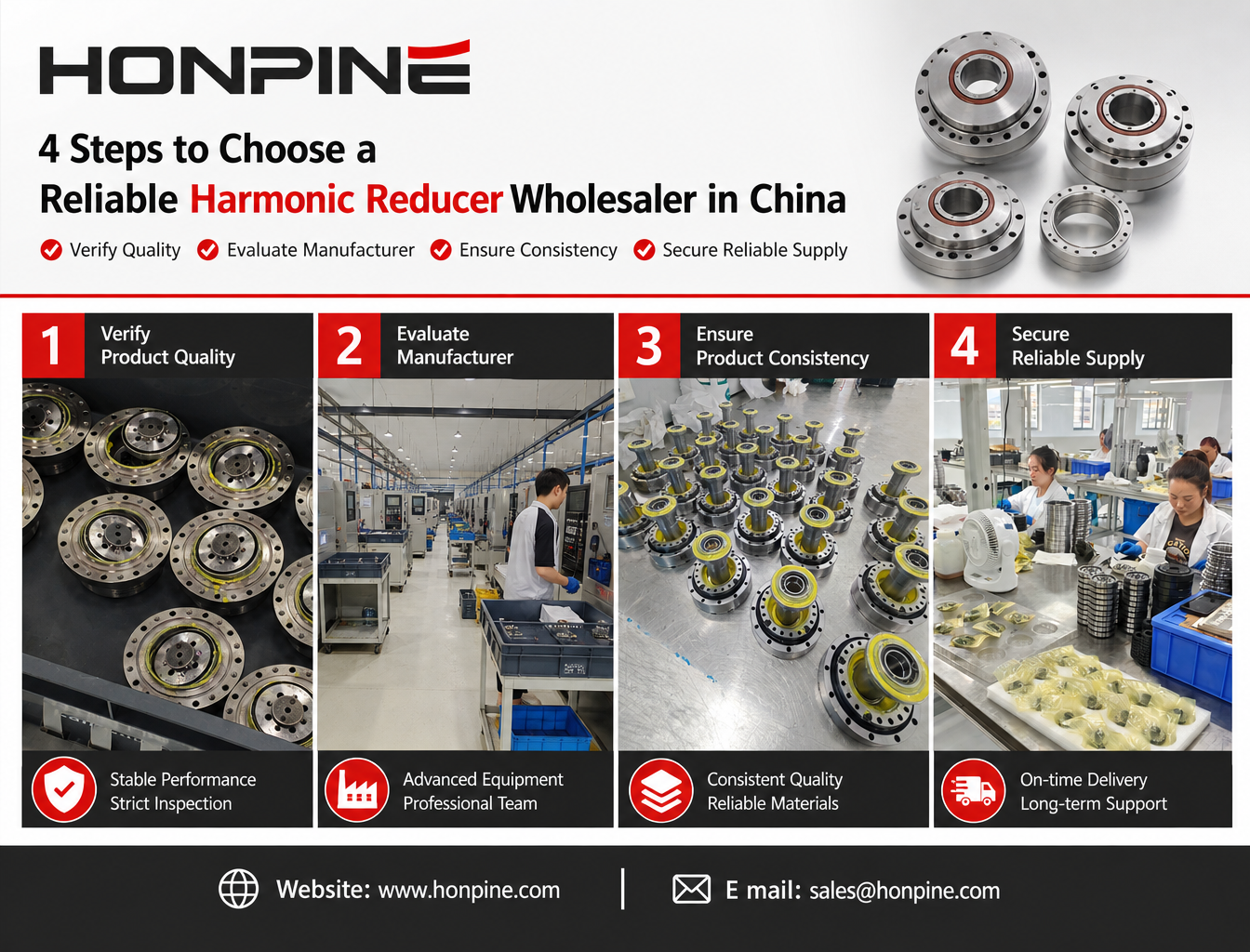
 How to Find a Reliable Harmonic Reducer Wholesaler in China?Choosing a reliable harmonic reducer wholesaler in China involves more than comparing prices and product specifications. Buyers need to evaluate technical capabilities, manufacturing quality, product consistency, and long-term supply reliability. Whether you are sourcing harmonic reducers for robotics, semiconductor equipment, CNC machinery, or industrial automation, understanding how to assess suppliers is essential. This guide outlines four practical steps to help you verify product performance, evaluate manufacturers, and make informed bulk purchasing decisions.
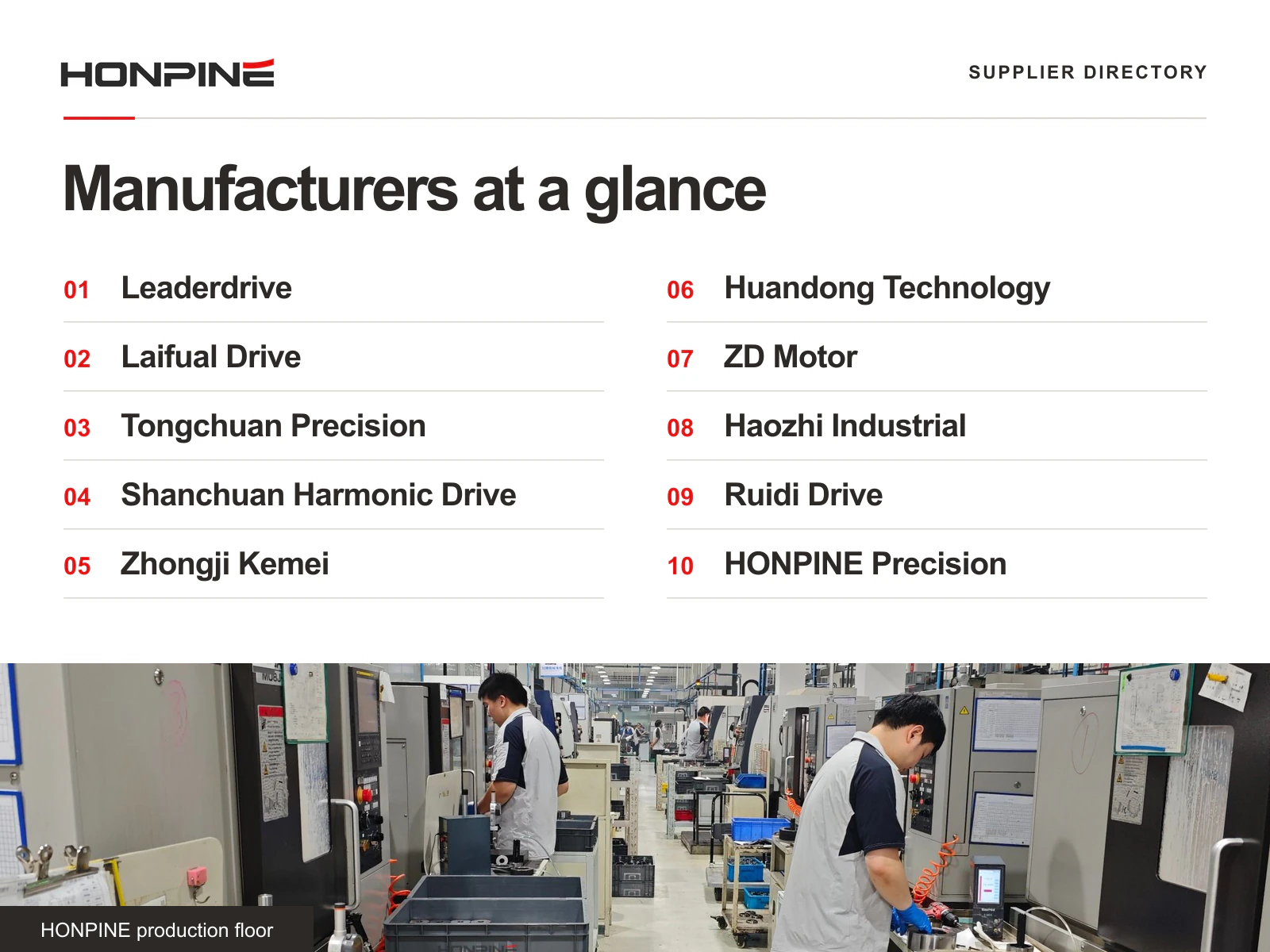
 Top 10 Harmonic Drive Reducer Manufacturers in ChinaChina has become an important manufacturing base for harmonic drive reducers, supplying precision transmission components to industrial robots, collaborative robots, humanoid robots, and high-end automation equipment. As more international buyers explore Chinese suppliers, understanding the differences between manufacturers is essential. In this article, we introduce 10 harmonic drive reducer manufacturers in China, examining their company backgrounds, product portfolios, technical capabilities, and typical applications to help engineers and procurement professionals identify potential suppliers.
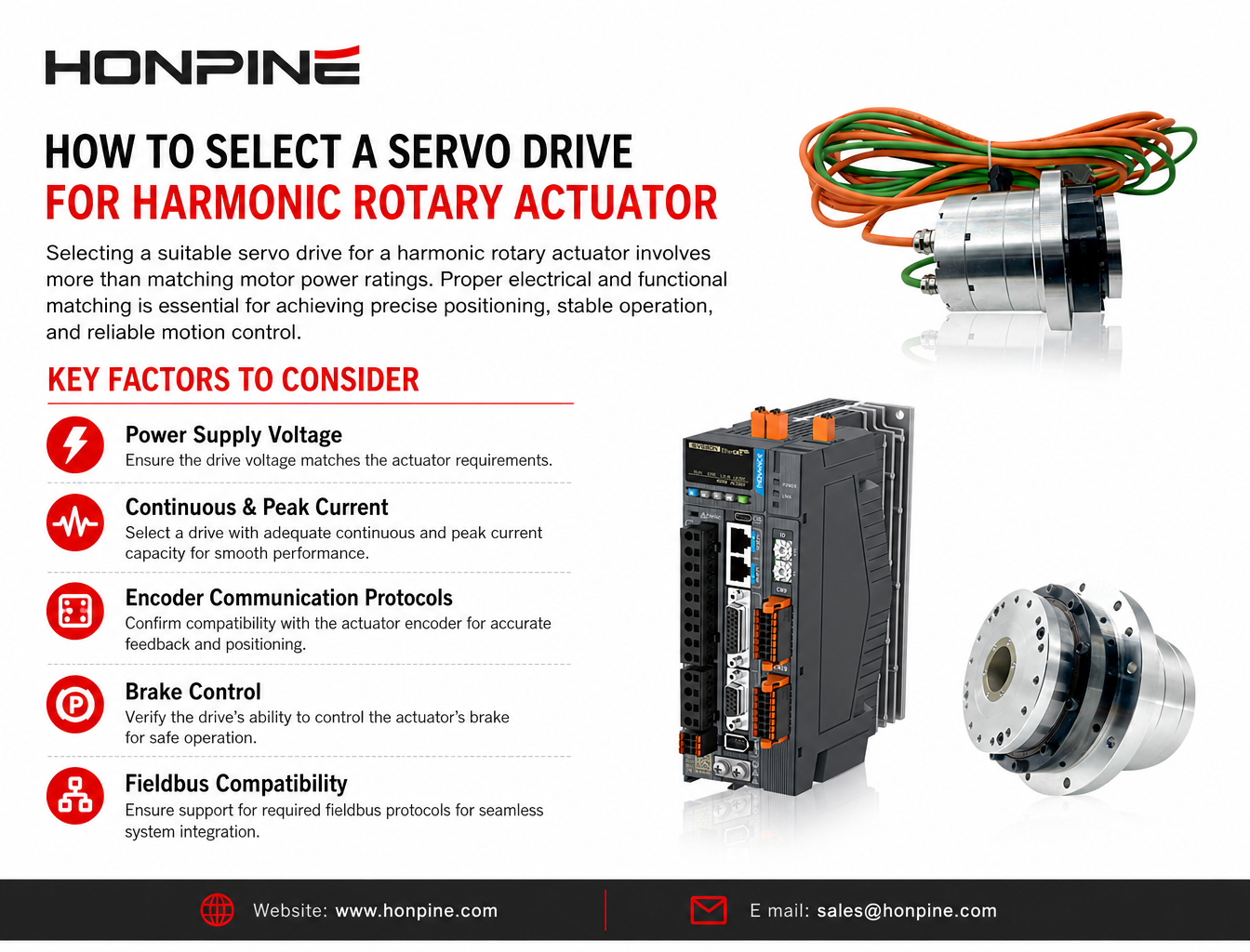
 How to Select a Servo Drive for HONPINE Harmonic Rotary Actuators with External Drives?Selecting a suitable servo drive for a harmonic rotary actuator involves more than matching motor power ratings. Power supply voltage, continuous and peak current, encoder communication protocols, brake control, and fieldbus compatibility all affect system performance. For HONPINE harmonic rotary actuators with external servo drives, proper electrical and functional matching is essential for achieving precise positioning, stable operation, and reliable motion control. In this guide, Theodore Li, Technical Director at HONPINE, explains the key factors engineers should consider when selecting and integrating an external servo drive.
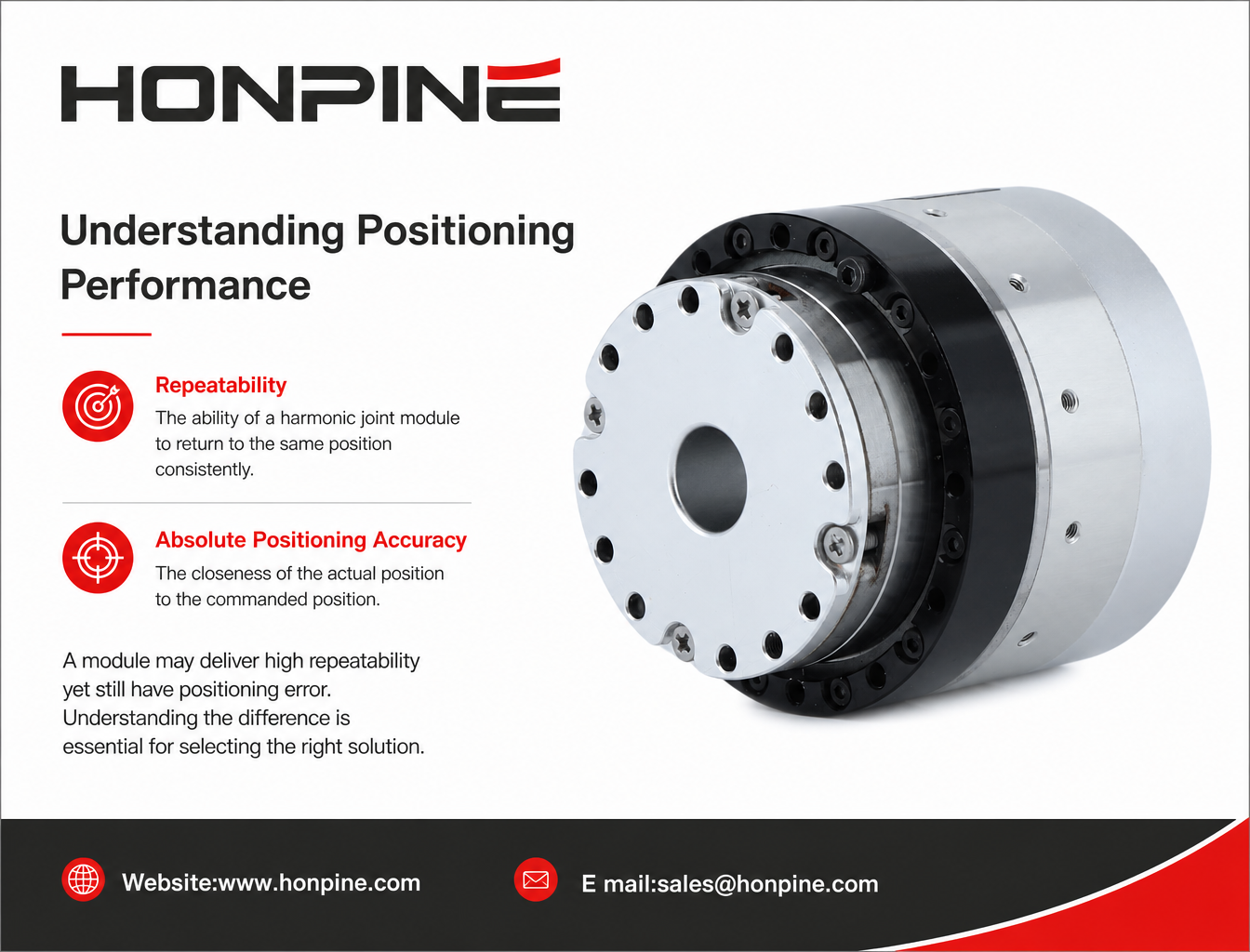
 Repeatability vs. Absolute Positioning Accuracy in Harmonic Joint Modules: Differences and Industrial ApplicationsWhen evaluating the positioning performance of a harmonic joint module, repeatability and absolute positioning accuracy are two important but often misunderstood specifications. A module may repeatedly reach the same position with high consistency while still having a noticeable deviation from the commanded position. Understanding this distinction is essential when selecting motion components for robotics, semiconductor equipment, precision machining, and medical devices. This article explains how the two specifications differ, what factors affect them, and which positioning performance should take priority in different industrial applications.
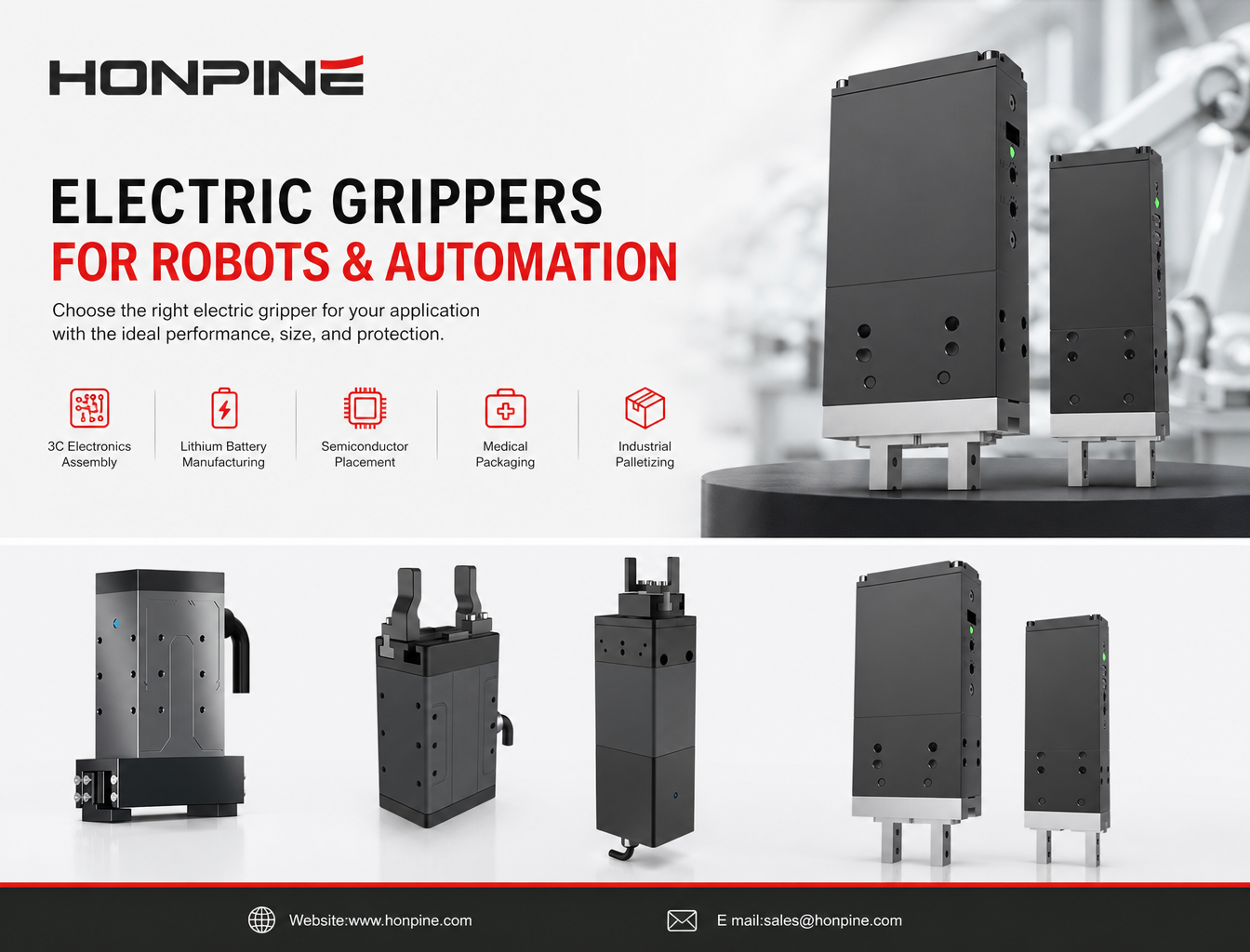
 How to Select Electric Grippers for Robots and Industrial Automation Production Lines?Electric grippers are essential robot end-effectors in modern industrial automation, enabling precise workpiece handling, assembly, positioning, and packaging. However, different applications require different gripping forces, stroke lengths, payload capacities, force control accuracy, and protection ratings. How should engineers select the right electric gripper for delicate 3C components, heavy lithium battery modules, semiconductor placement, medical packaging, or general industrial handling? In this article, Theodore Li, Technical Director at HONPINE, explains how to choose suitable electric grippers and linear rotary actuators based on actual application requirements.
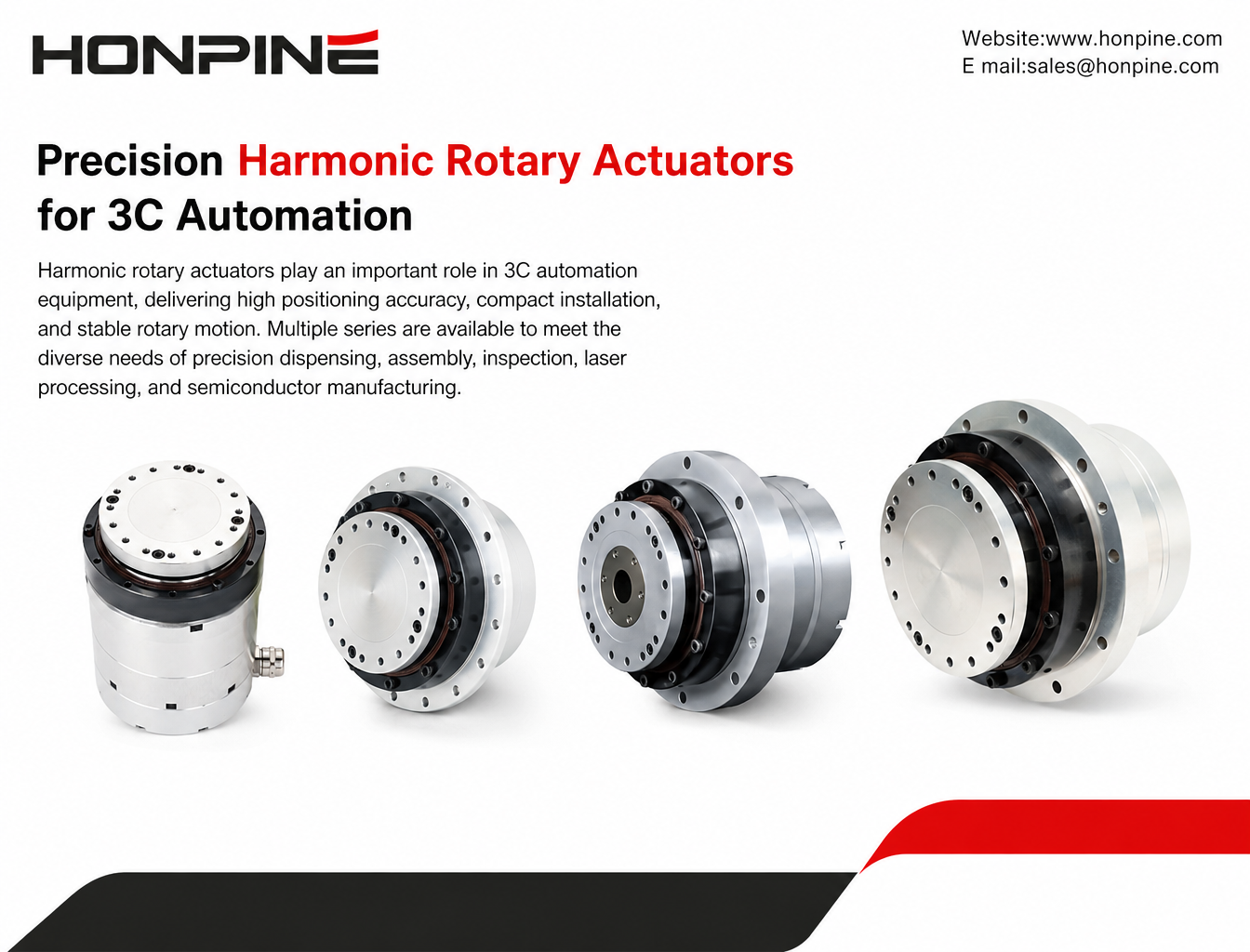
 How to Select Harmonic Rotary Actuators for Precision Assembly, Dispensing, and Inspection in 3C Automation Equipment?Harmonic rotary actuators play an important role in modern 3C automation equipment, particularly in applications requiring high positioning accuracy, compact installation, and stable rotary motion. From precision dispensing machines and smartphone assembly lines to machine vision inspection, laser processing, and semiconductor manufacturing equipment, different applications have different requirements for torque, rigidity, rotational speed, and shaft configuration. In this article, Theodore Li, Technical Director at HONPINE, introduces the HAT, HAS, HATF, and HAM series harmonic rotary actuators and explains how to select suitable models for different 3C automation applications.
Double Click
We provide harmonic drive reducer,planetary reducer,robot joint motor,robot rotary actuators,RV gear reducer,robot end effector,dexterous robot hand
 What is robot joint actuator?How to Choose the Best Robot Rotary Joint Actuator?In core robot joint transmission solutions, planetary and harmonic rotary actuators each have their own strengths. Choosing the right type based on application requirements is essential to achieve the optimal balance between performance and cost.
 DD Motors VS Harmonic Rotary ActuatorsThis article provides an in-depth comparison between Direct Drive (DD) motors and harmonic rotary actuators, covering their transmission principles, advantages and disadvantages, and typical application fields.
 OMG Ultra Compact Harmonic Drive Joint Module with Built-in Torque SensorHONPINE TCHL series harmonic drive joint module is a game-changing product that achieves disruptive improvements in multiple aspects such as lightweight design, integration level, and connection convenience. This article will analyze its revolutionary enhancements with you.
 How to Find a Reliable Harmonic Reducer Wholesaler in China?Choosing a reliable harmonic reducer wholesaler in China involves more than comparing prices and product specifications. Buyers need to evaluate technical capabilities, manufacturing quality, product consistency, and long-term supply reliability. Whether you are sourcing harmonic reducers for robotics, semiconductor equipment, CNC machinery, or industrial automation, understanding how to assess suppliers is essential. This guide outlines four practical steps to help you verify product performance, evaluate manufacturers, and make informed bulk purchasing decisions.
 Top 10 Harmonic Drive Reducer Manufacturers in ChinaChina has become an important manufacturing base for harmonic drive reducers, supplying precision transmission components to industrial robots, collaborative robots, humanoid robots, and high-end automation equipment. As more international buyers explore Chinese suppliers, understanding the differences between manufacturers is essential. In this article, we introduce 10 harmonic drive reducer manufacturers in China, examining their company backgrounds, product portfolios, technical capabilities, and typical applications to help engineers and procurement professionals identify potential suppliers.
 How to Select a Servo Drive for HONPINE Harmonic Rotary Actuators with External Drives?Selecting a suitable servo drive for a harmonic rotary actuator involves more than matching motor power ratings. Power supply voltage, continuous and peak current, encoder communication protocols, brake control, and fieldbus compatibility all affect system performance. For HONPINE harmonic rotary actuators with external servo drives, proper electrical and functional matching is essential for achieving precise positioning, stable operation, and reliable motion control. In this guide, Theodore Li, Technical Director at HONPINE, explains the key factors engineers should consider when selecting and integrating an external servo drive.
 Repeatability vs. Absolute Positioning Accuracy in Harmonic Joint Modules: Differences and Industrial ApplicationsWhen evaluating the positioning performance of a harmonic joint module, repeatability and absolute positioning accuracy are two important but often misunderstood specifications. A module may repeatedly reach the same position with high consistency while still having a noticeable deviation from the commanded position. Understanding this distinction is essential when selecting motion components for robotics, semiconductor equipment, precision machining, and medical devices. This article explains how the two specifications differ, what factors affect them, and which positioning performance should take priority in different industrial applications.
 How to Select Electric Grippers for Robots and Industrial Automation Production Lines?Electric grippers are essential robot end-effectors in modern industrial automation, enabling precise workpiece handling, assembly, positioning, and packaging. However, different applications require different gripping forces, stroke lengths, payload capacities, force control accuracy, and protection ratings. How should engineers select the right electric gripper for delicate 3C components, heavy lithium battery modules, semiconductor placement, medical packaging, or general industrial handling? In this article, Theodore Li, Technical Director at HONPINE, explains how to choose suitable electric grippers and linear rotary actuators based on actual application requirements.
 How to Select Harmonic Rotary Actuators for Precision Assembly, Dispensing, and Inspection in 3C Automation Equipment?Harmonic rotary actuators play an important role in modern 3C automation equipment, particularly in applications requiring high positioning accuracy, compact installation, and stable rotary motion. From precision dispensing machines and smartphone assembly lines to machine vision inspection, laser processing, and semiconductor manufacturing equipment, different applications have different requirements for torque, rigidity, rotational speed, and shaft configuration. In this article, Theodore Li, Technical Director at HONPINE, introduces the HAT, HAS, HATF, and HAM series harmonic rotary actuators and explains how to select suitable models for different 3C automation applications.
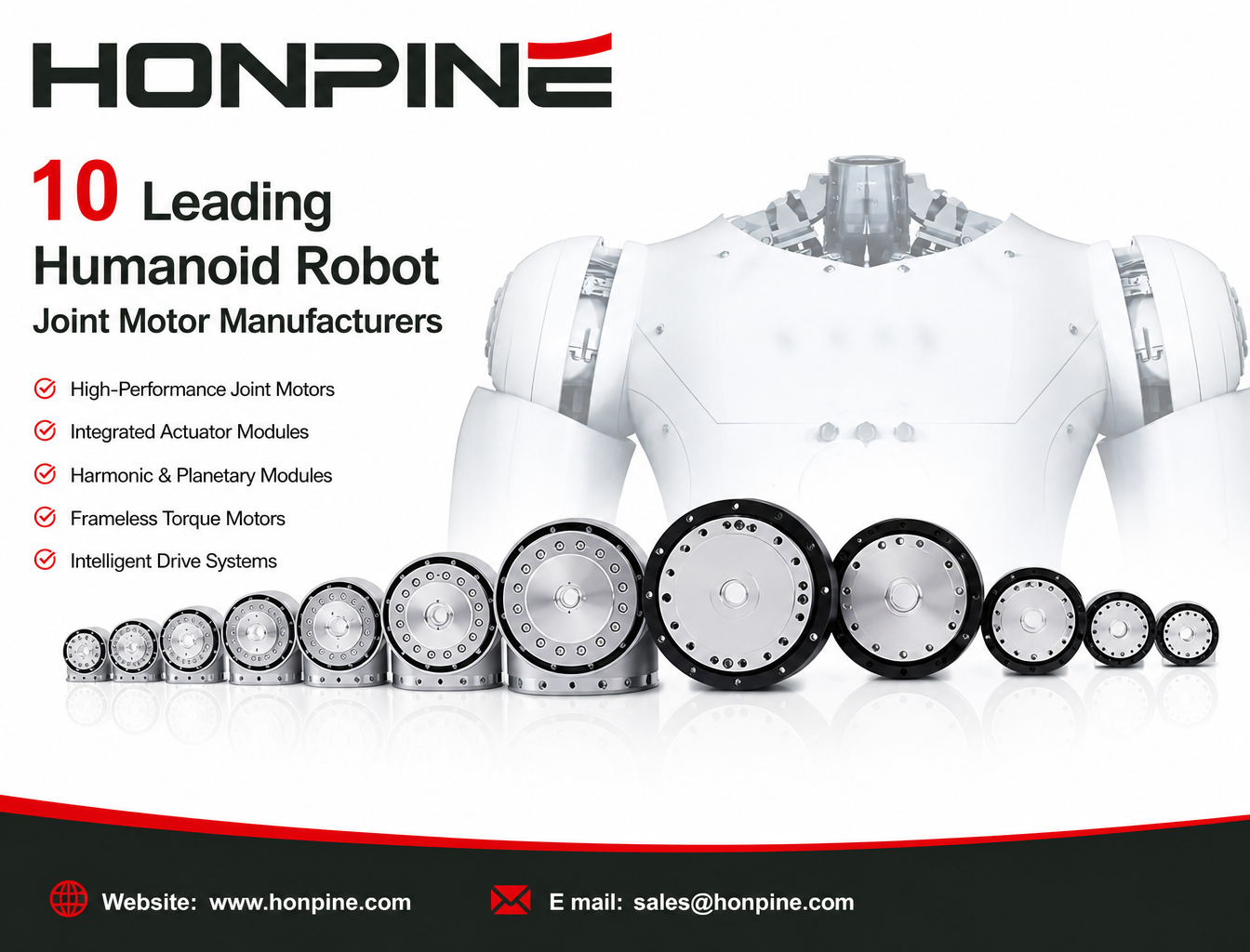
 Top 10 Humanoid Robot Joint Motor ManufacturersThe rapid development of humanoid robotics is driving demand for high-performance joint motors and integrated actuator modules. From harmonic and planetary joint modules to frameless torque motors and intelligent drive systems, manufacturers are developing different solutions to meet the requirements of humanoid robot joints. But which supplier should you choose? In this article, we introduce 10 humanoid robot joint motor manufacturers from China and Japan, comparing their product portfolios, technical features, torque capabilities, and application areas to help robotics developers and manufacturers make more informed sourcing decisions.
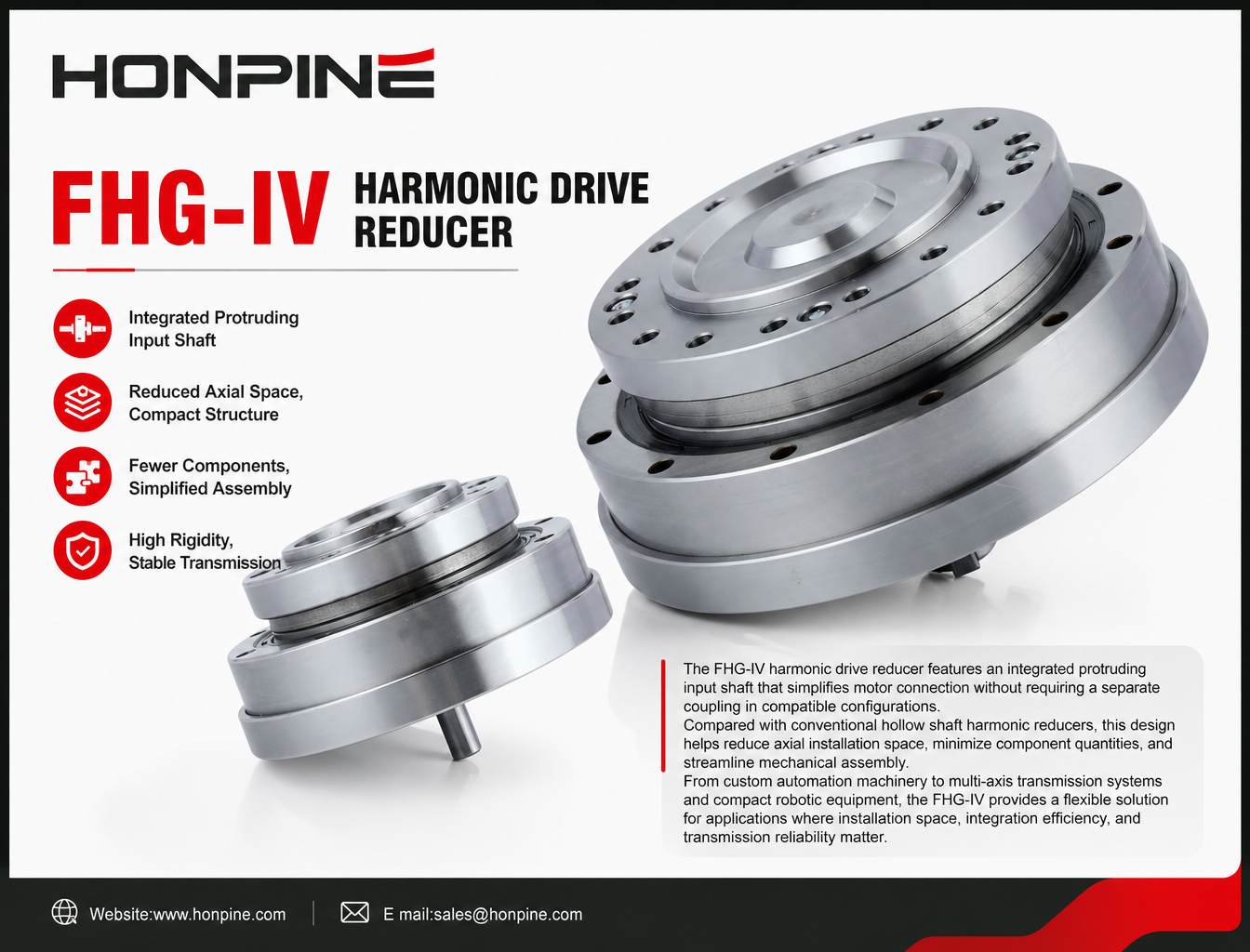
 FHG-IV Harmonic Drive Reducer: Eliminate the Coupling for a More Compact DesignThe FHG-IV harmonic drive reducer features an integrated protruding input shaft that simplifies motor connection without requiring a separate coupling in compatible configurations. Compared with conventional hollow shaft harmonic reducers, this design helps reduce axial installation space, minimize component quantities, and streamline mechanical assembly. From custom automation machinery to multi-axis transmission systems and compact robotic equipment, the FHG-IV provides a flexible solution for applications where installation space, integration efficiency, and transmission reliability matter.
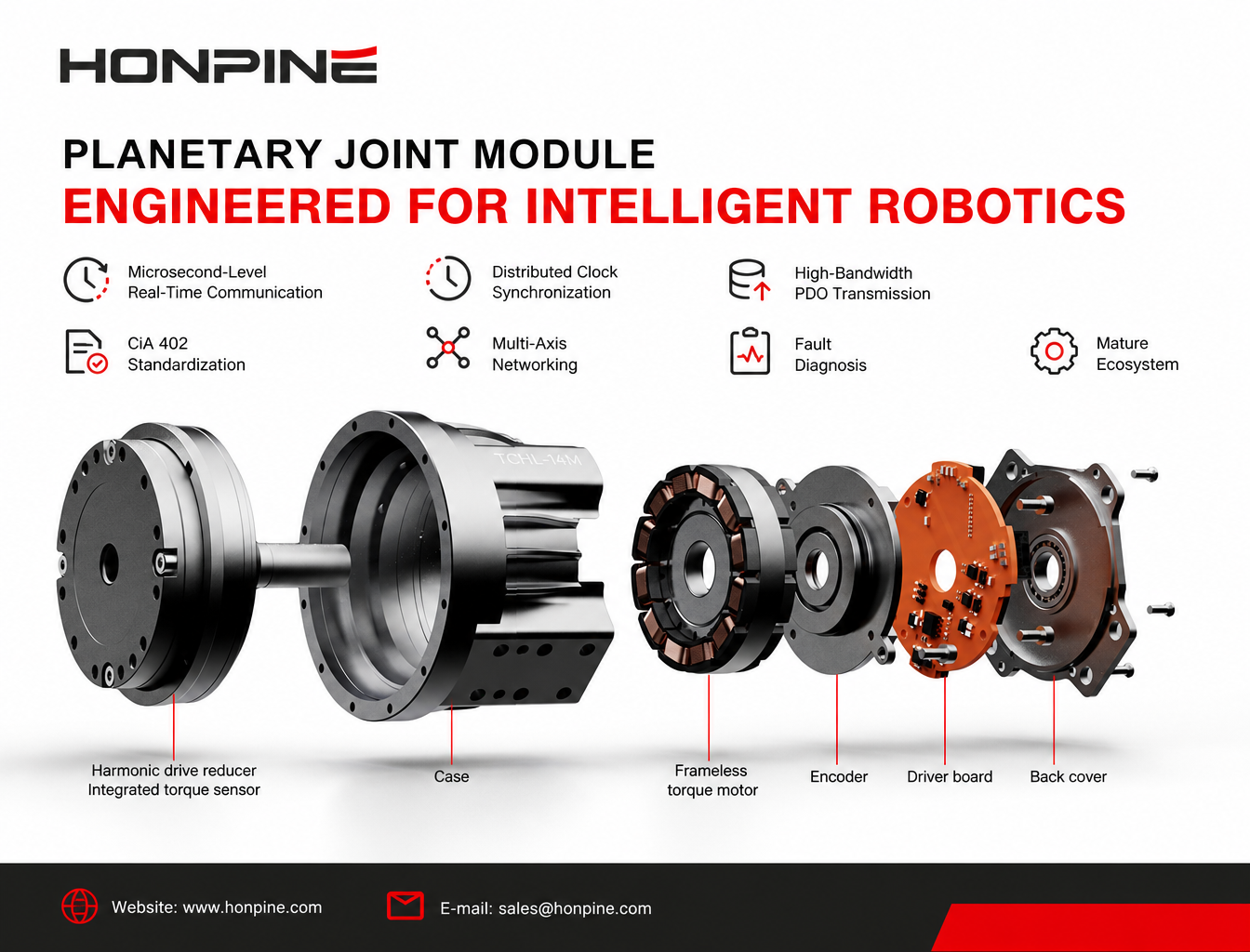
 Why Is EtherCAT Becoming the Mainstream Communication Bus for Robotic Joint Modules?Why is EtherCAT becoming the mainstream communication solution for intelligent robotic joint modules? This article explores seven key advantages, including microsecond-level real-time communication, Distributed Clock synchronization, CiA 402 standardization, high-bandwidth PDO transmission, multi-axis networking, fault diagnosis, and a mature development ecosystem. Learn how EtherCAT supports the advanced control requirements of humanoid robots, collaborative robots, and high-precision automation equipment.